Thursday, June 10, 2010

June in the Garden

From K.H.:

Good Morning,

Just a reminder that even if it is not "your week," the garden still needs you! Thanks to Lynn for weed-eating between the rows and the different tiers. Things are looking great up there. I was able to paper and mulch one of the three rows of peppers. We need to get the other two rows mulched and papered asap! It would not be a bad idea to throw some mulch between the basil plants, either. I don't think we have enough space between them to paper. Newspaper is in the playhouse.


In any event, we were able to get another load of mulch yesterday, so Ann and I completed the papering and mulching of the okra. Tier three is almost complete! Tier two is looking great except for the cucumbers. They need to be weeded and mulched. The Ann and Abbie wire cages look great, and we can use the additional wire to stake the tomatoes.

I'll be out of town all weekend, but I'll be available to work in the evenings next week. Call me if you're heading over there and need the company. Please go ahead and pick any small vegetables, too, to encourage new growth. We want to hurry the harvest along! I used my last two bags of frozen tomatoes from last summer's garden last night. Time to re-can and re-freeze.

See you in the weeds,
K.H.

Tuesday, June 1, 2010

2010 Plant List

"God almighty first planted a garden. And indeed, it is the purest of human pleasures."-- Francis Bacon

In my world, Spring begins twice: on the vernal equinox and again when school is out for the summer. Both are wondrous beginnings, points at which I revel in what will become. In this post I'm just recording some images of the garden as of the beginning of June, and the list of plants for 2010.


In my world, Spring begins twice: on the vernal equinox and again when school is out for the summer. Both are wondrous beginnings, points at which I revel in what will become. In this post I'm just recording some images of the garden as of the beginning of June.


Lower tier: basil, peppers, eggplant and tomatoes:

Middle tier: zinnia, squash, and melons:

Upper tier: hot peppers, cucumbers, peas, beans, and okra:


2010 PLANT LIST:

Basil: Genovese (50), Lettuce Leaf (50)

Peppers: Tequila Sunrise (8), Chocolate Bell (16), Mole (10), Emerald Giant (18), Yellow Monster (10), jalepeno (10), chili (2), habanero (2)

Eggplant: Snowy (12), Listada de Gandia (6), Louisiana Long Green (2)

Tomatoes: Rutgers (13), Early Girl (13), Tennessee Green (13), Yellow Pear (7), Roma (9), Cherokee Purple (12), Yellow (6), Nebraska Wedding (6), Volunteer Cherry (2), Sweet 100 (2)

Zinnia: many (Purple, Lavender, White, Multi)

Zucchini: Costata Romanesca (4 hills)

Squash: Yellow Crookneck (4 hills), White Scallop (4 hills)

Melon: Ali Baba (12 hills), Emerald Gem (9 hills), Old Time TN (6 hills), Green Machine (6 hills)

Bush Beans: Blue Lake (two 6' rows)

Cucumbers: Snow's (8 hills), National (8 hills), Armenian (4 hills)

Okra: Dwarf Green (30), Clemson Spineless (30), Burgundy (30)

Peas: Oregon Sugar Pod (20' row), Sugar Ann (two 6' rows)

Onion: sets, two 6' rows

Sunday, May 30, 2010

How to Prune Basil

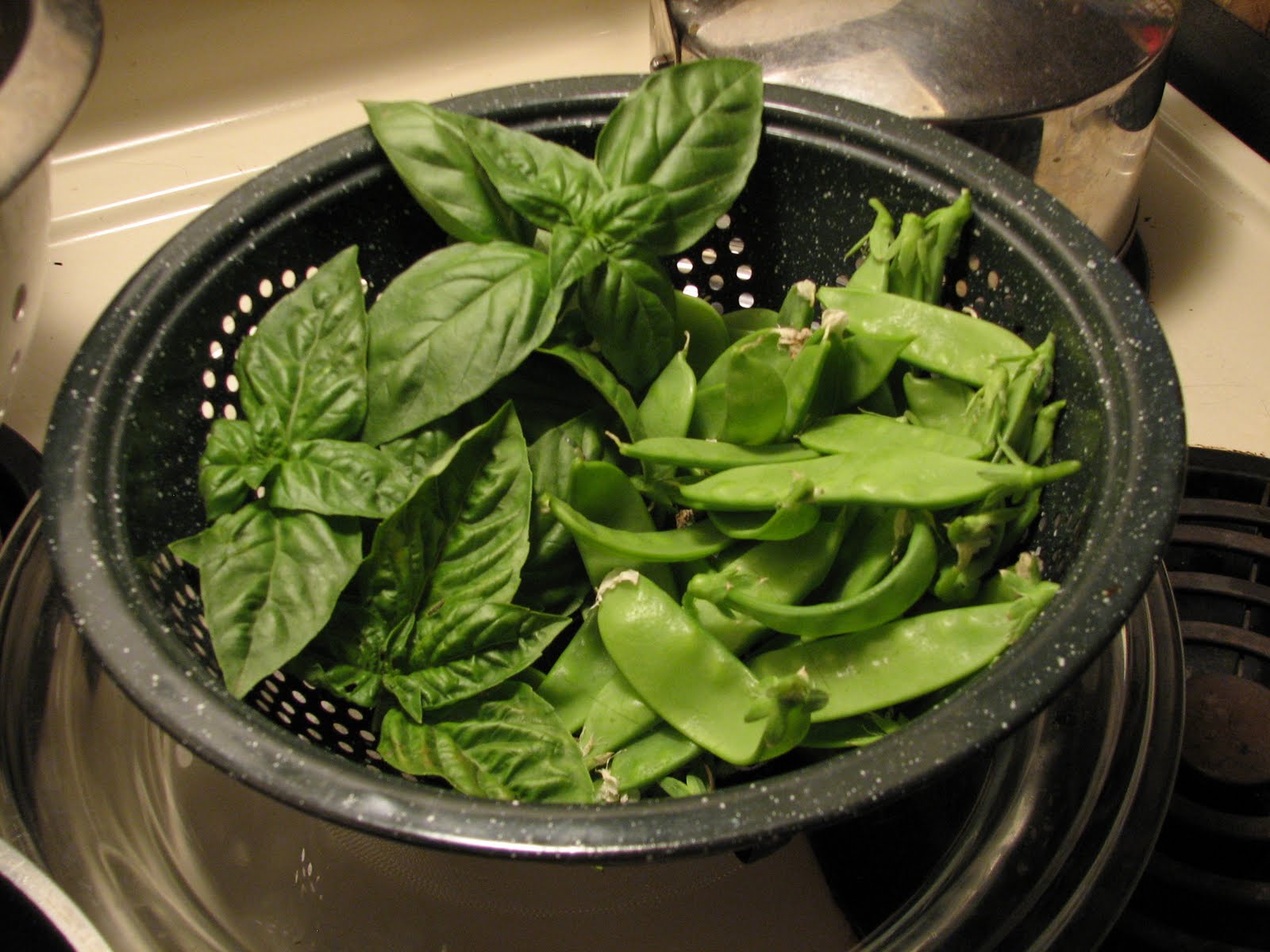
This week, we harvested the first fruits of the 2010 season: snap peas (Oregon Sugar Pod; Sugar Ann) and basil (Genovese, the traditional pesto variety, and Lettuce Leaf, a slightly more spicy, ruffled-leaved plant).


It is important to prune basil correctly if you want to get the most out of your plants. This is very easy to do if you understand how the basil plant grows. In the picture below, you can see the growing habit of the young basil plant. This picture was taken on May 30, two weeks after we transplanted the basil. Look at the two large plants in the middle of the image. You can see how as the plant grows upward from a primary stem, new leaves sprout at the leaf nodes (center, right).


These new sprouts will grow into individual stems (center, left). If you cut the primary stem just above the leaf node, these new stems will grow strong and the plant will develop a branching habit. And you will enjoy an abundant harvest all summer.


Sunday, May 16, 2010

Planting Tomatoes

Healthy tomatoes, ready to plant:


The blank canvas:


Andrea, Brent and Sande planting the Tennessee Green tomatoes:

Saturday, May 15, 2010

2010 Garden: Starting from Seed

"I used to visit and revisit it a dozen times a day, and stand in deep contemplation over my vegetable progeny with a love that nobody could share or conceive of who had never taken part in the process of creation. It was one of the most bewitching sights in the world to
observe a hill of beans thrusting aside the soil, or a rose of early peas just peeping forth sufficiently to trace a line of delicate green." (from Mosses from an Old Manse, 1854) -- Nathaniel Hawthorne

2010 starts, as of May 2:

2010 plans (very scientific, no?):

2010 starts, as of May 14 ready for planting (and yes, that is a toilet in the upper right: evidence of bathroom remodeling):

2010 plants on May 15:


Sunday, April 4, 2010

Seed Starts

We are growing more plants from seed for 2010, and I've been experimenting with some techniques to hasten and maximize germination.

For anyone starting plants from seed, I recommend that you do your research! In the past I've wasted seed and lost plants because of simple lack of knowledge. There are some great resources linked from this blog.

I purchased germination mats ($24.99 each at The Barn Nursery) to warm the soil in my germination flats. In the first of these these (planted on March 29), I sowed Holy Mole pepper, Early Girl and Rutgers tomato, and four varieties of basil. After four days, the cotyledons are up for all basil varieties and the Rutgers tomato. I can see that the Early Girl tomato is also about to poke through.


There are no seedlings yet in the other flat (planted on March 30). That is to be expected, because these plants and varieties usually take about a week to germinate:

Spear's Green tomato
Yellow Pear tomato
Louisiana Long Green Eggplant
Snowy Eggplant
Chocolate Pepper
Chinese 5 Color Pepper
Emerald Giant Pepper
Yellow Monster Pepper

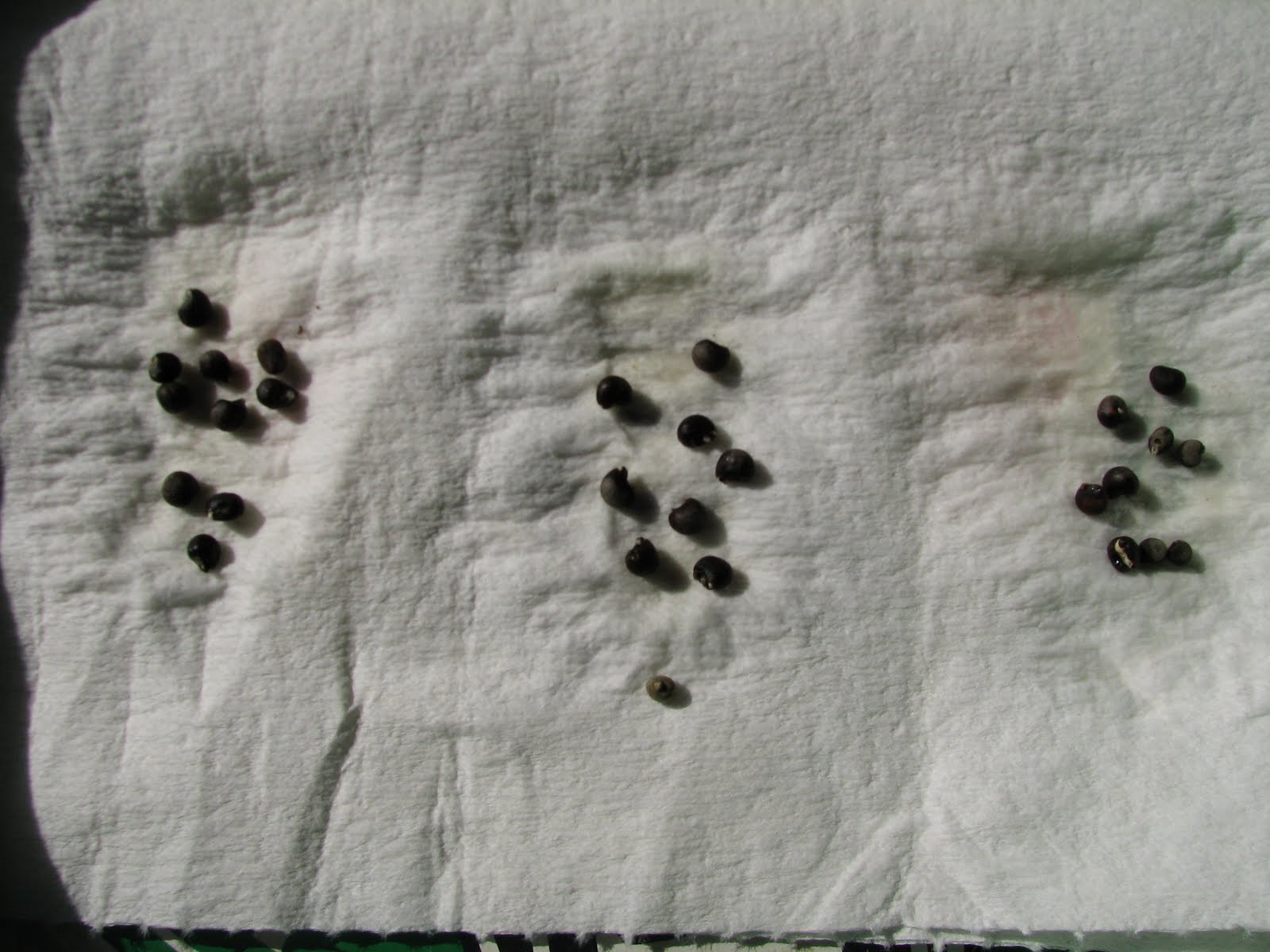
In addition, I've been experimenting with okra seeds. Some people recommend soaking okra seeds in water for 24 hours, then planting only the ones that swell. So, I set up a plastic egg package to test whether or not soaking the seeds makes a difference. I planted seeds from 3 different varieties (Burgundy, Clemson Spineless, Dwarf Green) in the rear row of cups, and put the little "greenhouse" in the sun.

I put the same number of seeds in water for 24 hours...

By the next day, the majority of the soaked seeds had swelled. For the photo below, I placed a dry seed below the center group to show the size difference. A few of the seed covers had split.

I planted these seeds in the front row of cups and gave the greenhouse another day in the sun. After just three days, the seedlings are coming up in both rows - but more seedlings have grown from the soaked seeds and they seem to be a little more developed. We'll see how they do in the next few days.

Starting Up

With spring break coming to an end, I can no longer spend most of the day playing in the garden. Here's what I've been up to... Last week in the garden cool weather weeds were thriving and spring bulbs were in bloom.

When the daffodils, grape hyacinths, and iris are done flowering, I'll dig them out and move them so we can expand the vegetable beds without destroying the plants.

I almost missed the pleasant surprises growing among the vetch and henbit. Can you spot the red-leaf lettuce poking up through the weeds? These plants grew from seed sown in fall '09. I salvaged a number of plants for transplant - and some wild green onions for cooking.

I also spent some time gathering dandelion leaves, because I remember how my mother used to make delicious cooked greens from this spring weed. However, the result was a bit of a disaster. No amount of bacon grease, salt, garlic or pepper could mask the acrid taste! Mom, how did you do it?